
Don’t Cut The Mic
by Joy Matheny | June 24, 2026 |
Why Going Dark Is The Most Expensive Thing You Can Do Right Now
The headlines aren’t subtle. Economic unrest. Jet fuel costs climbing faster than your travel budget can absorb. Inflation is putting pressure on every line item. If your events budget has already taken a hit, or you’re bracing for the conversation with finance that’s coming, you’re not alone.
Here’s what nearly four decades in the events industry have taught us: this moment is not new. We’ve been here before. Multiple times. And every single time, the organizations that pulled back on communication, that went dark to save money, paid a price that never showed up on the original event budget spreadsheet.
The cost of silence is real.
It’s just harder to measure than a hotel invoice. So, before you cancel the annual kickoff, freeze the events calendar, or tell your team to “wait and see,” read this.
Because there’s a smarter way through, and as a creative event agency that has navigated every economic curveball of the last 40 years, we’ve helped hundreds of organizations find it.
You Can’t Pause Trust
When budgets tighten, the instinct is to cut what feels optional. And events, on the surface, can look optional. They’re visible. They’re line items. They have invoices attached to them.
But here’s what doesn’t show up as a line item: the employee who starts quietly updating their resume because leadership stopped communicating during a difficult quarter and they’re unsure where their role or the company stands. The customer who drifts to a competitor because your touchpoints disappeared. The sales team that loses momentum because the annual kickoff, the one event that aligns the whole organization around the year’s priorities, got shelved indefinitely.
Silence in uncertain times doesn’t read as neutral. It reads as uncertainty. And uncertainty is contagious.
Our CEO, Matt Franks, has sat across the table from clients navigating four separate economic downturns. His observation is consistent: the organizations that kept communicating, intentionally, strategically and consistently, emerged stronger every time. Not because they spent more, but because they stayed visible when others went quiet.
Consistent communication isn’t a luxury. It’s a competitive advantage. And right now, a lot of your competitors are about to hand it to you for free.
Reconsider the Format, Not the Mission
Here’s the conversation we’ve had with clients more than any other recently: “We can’t afford to bring everyone together.”
Our response: you don’t have to.
The goal of your annual kickoff isn’t meeting in the hotel ballroom. It’s alignment. Energy. Shared purpose. A team full of people who understand where the organization is going and feel genuinely connected to getting there. You can achieve all of that without flying 1,200 people to the same city and putting them up in a hotel for three nights.
Consider these alternatives, ones we’ve helped clients execute effectively when budget pressure was real:
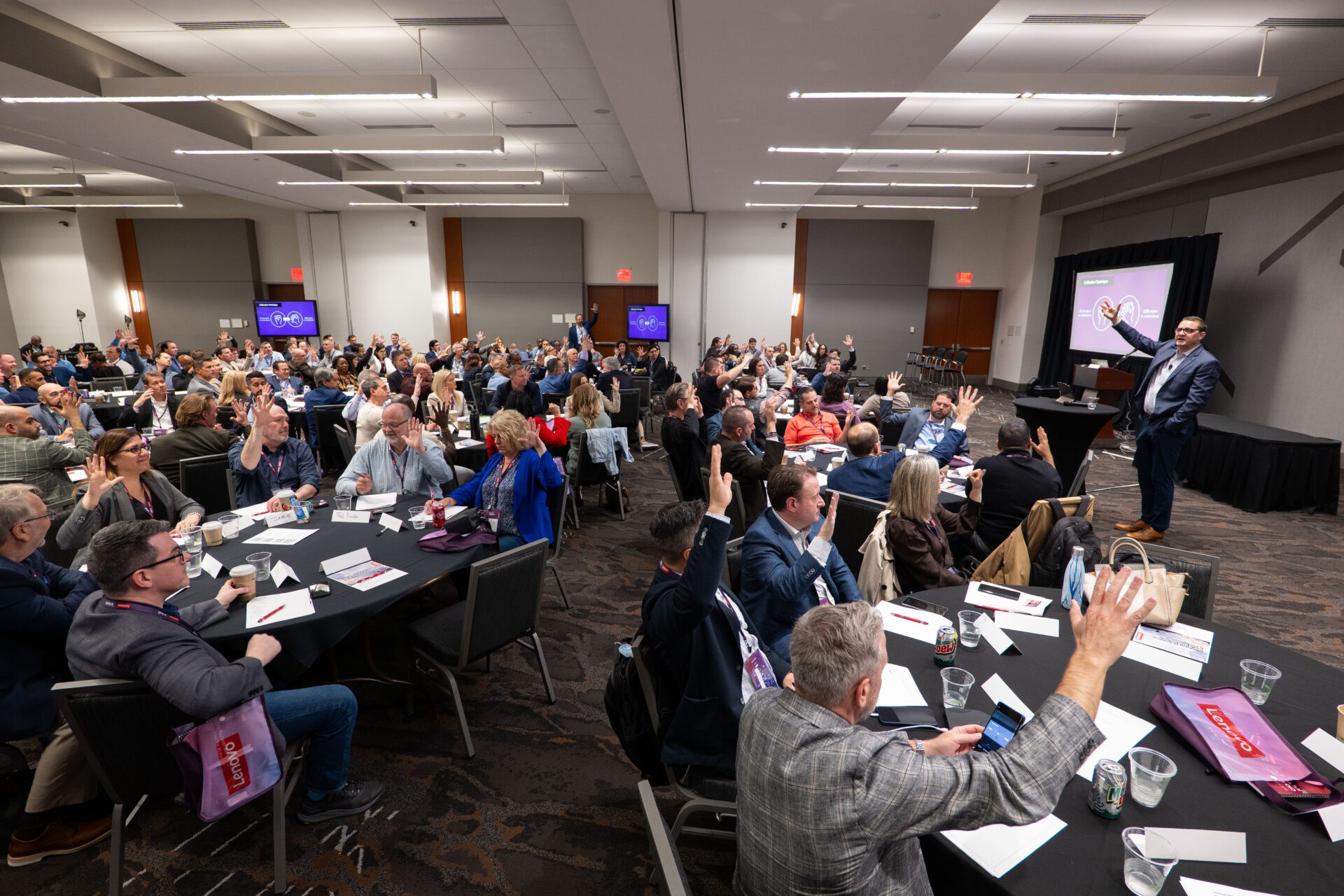
• The Leadership Roadshow: Instead of flying your entire workforce to one location, send your leadership team on the road. Host smaller, more intimate regional gatherings in your top markets, without the cost of mass travel and accommodation for the entire company. The conversations are targeted. The connections are deeper. And the budget impact is dramatically lower.
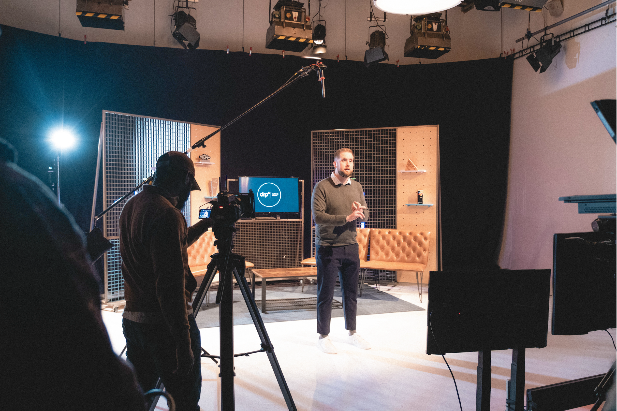
• The Fully Virtual Town Hall: Done well, a virtual town hall isn’t a compromise, it’s a different kind of experience. One with higher production value, broader reach, real-time engagement tools, and data you can actually use. As a virtual event production company, we’ve produced fully virtual town hall meetings that scaled a company’s messaging while actively boosting attendee engagement.
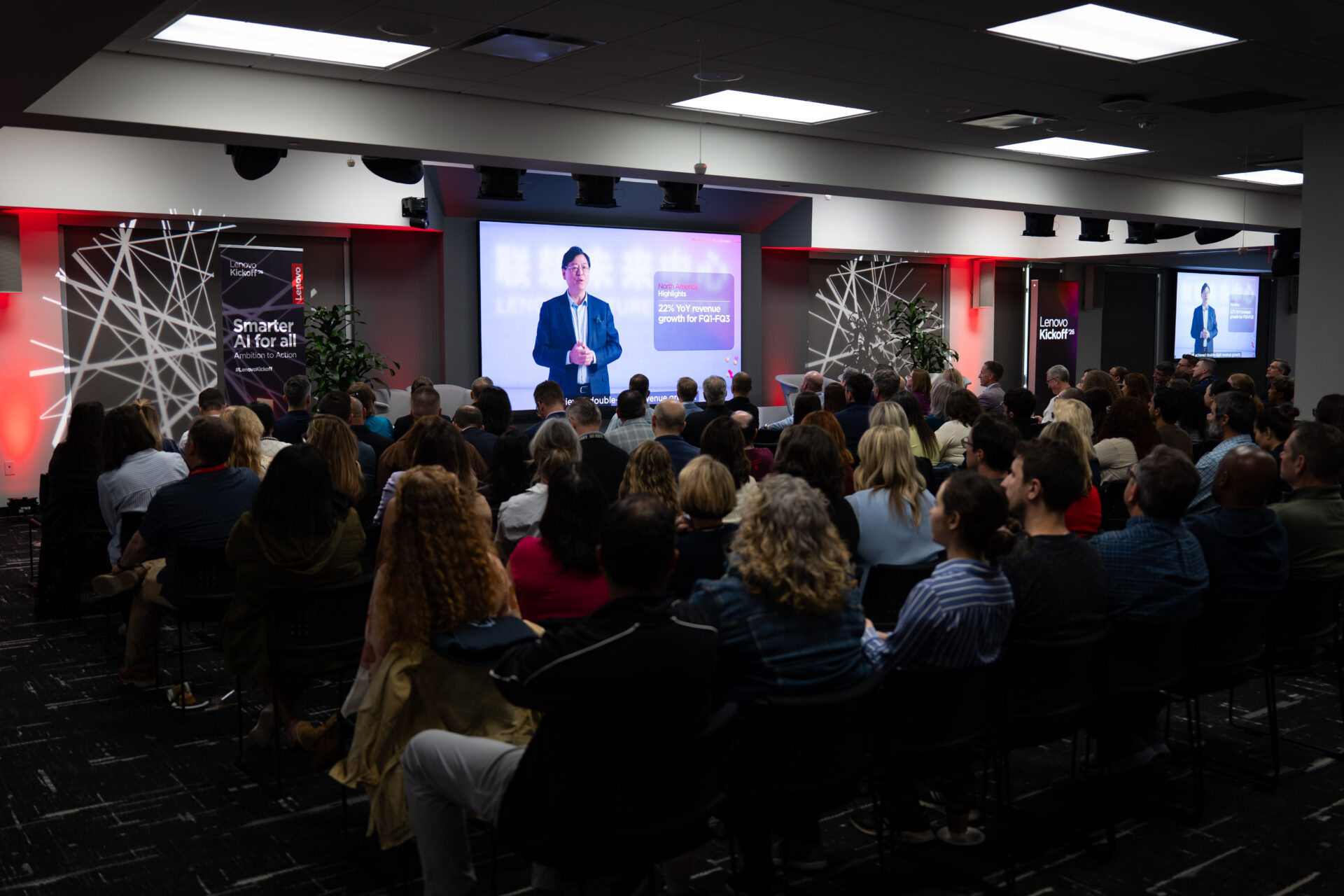
• The Hybrid Middle Ground Kickoff: Perhaps your annual sales kickoff turns into a hybrid event, where you bring your core leadership and key stakeholders to your HQ, where the majority of your employees work, and host a watch party with ancillary events before and after the viewing to extend the community experience. Those outside of your HQ can participate in the virtual experience, complete with a dedicated “host” for this audience, to make it feel more personalized and thoughtful. A well-executed hybrid event strategy doesn’t dilute the in-room experience; it extends it. And it gives you the flexibility to scale your virtual audience without scaling your costs.
As an experiential events company that operates across all three of these formats every week, we’re not guessing at what works. We’re drawing on years of experience for clients with full budgets, reduced budgets and everything in between.
Extend Your Reach, Extend Your Impact
Here’s the truth: in-person events create moments that matter. They build culture, align teams and close deals. But they’re also occasional. Your annual kickoff happens once a year. Your regional sales summit happens bi-annually. Your client events are spaced throughout the calendar.
What happens in between?
Organizations that stay visible between in-person moments are the ones that stay top-of-mind. They’re the ones whose teams stay aligned and the ones whose pipelines don’t go quiet in the months between major events.
That’s where virtual and hybrid event formats come in. Not as replacements for your flagship in-person experiences, but as the connective tissue that keeps communication flowing. They are additional tools in your toolbox. A virtual town hall that reaches your global workforce when geography would otherwise exclude them. A webinar series that nurtures leads between your sales summits and user conferences. A hybrid regional gathering that brings people together without the cost of flying everyone to one location.
In person creates the momentum. Virtual extends it.
The organizations that emerge strongest from budget pressure are the ones that didn’t go silent. They stayed present, stayed connected, and stayed in front of their audience, using the right format at the right time.
We’ve been helping clients build exactly this kind of integrated communication strategy for years. Not just executing the event, but helping you design a portfolio that keeps your organization visible, connected, and aligned year-round. That’s what a true event planning company partner looks like, one that helps you prove the value of every investment, not just deliver the experience.
This is How We’re Built
There’s a version of pivoting to virtual or hybrid that goes badly. It’s the version where a company patches together a platform, briefs a presenter on Zoom etiquette the morning of the event, and calls it a virtual conference. The audience checks out by slide three.
That’s not what we do.
TSEC is structured from the ground up to deliver across live events, hybrid events, and virtual formats with equal rigor. Our event strategy process doesn’t change based on the format. We start with your why, then move to your objectives, while considering what you want your audience to know, think, feel and do. And then we design the experience that delivers it most effectively within your budget.
When a client needs to pivot from a live event to hybrid or to fully virtual, we’re not improvising. We have the playbook, the production infrastructure, the technology partnerships, and most importantly, the experience to make the pivot seamless. We’ve done it with long lead times and very short ones. The format changes, but the standard never does.
That’s what 39 years as a leading experiential event company builds. Not just the ability to execute, but the judgment to know which execution is right for the moment.
Frequently Asked Questions and Answers
We hear a lot of the same questions from clients navigating budget pressures and shifting event formats, so we wanted to share with you the ones that come up most, and our honest answers.
My events budget just got cut. I’m not sure how I’m going to make it work. Should I cancel everything?
Canceling entirely is rarely the right answer, and it’s often more expensive in the long run than it appears. You’ll need to review any signed contracts to confirm what you’re contractually responsible for first. Then from there, consider your options to reconfigure, not cancel. That might mean shifting to a regional roadshow format, moving to hybrid, or going fully virtual. There are many tools in your toolbox, and each option can deliver your core message at a fraction of the original cost, without going silent.
How do I justify keeping events in the budget when leadership is cutting everything?
The answer lies in evidence. Events generate measurable, reportable data such as attendance rates, engagement metrics, lead generation, session attendance, social media buzz, secured press coverage, sponsorships, total revenue, etc. When you walk into a budget conversation with clear objectives and measurable results, the conversation shifts from “why events?” to “how do we do more of this?” That’s exactly what we help you build.
We’ve always done a big in-person company kickoff. What are our real alternatives?
Two that work extremely well: the leadership roadshow (your executive team travels to regional groups rather than flying the entire company to one place) and the hybrid kickoff (high-production-value, interactive, and engaging for both in-person and virtual attendees). Both are formats we execute regularly as a full-service event planning company, and both can be delivered at a cost that makes your finance team comfortable.
Are virtual events actually effective for employee engagement?
Yes! But success depends heavily on your goals and event design. For in-person events with everyone in the room, there’s no substitute for the energy and connection created by being physically present. But for distributed workforces or teams across multiple time zones, virtual and hybrid formats become critical inclusion tools. The key is designing intentionally for engagement, not just broadcasting a presentation. When done well, virtual events keep remote employees connected and aligned. When done poorly, they’re background noise.
How do we keep communicating consistently without overspending?
Consistency doesn’t require big budgets; it requires intentional planning. The organizations that emerge from difficult periods in the strongest position are those that stayed present and communicated with purpose, even when resources were constrained. Virtual events, hybrid formats, and targeted regional gatherings are all tools that let you maintain that presence cost-effectively. The goal isn’t to replicate what you did before at a lower price, but rather to find the format that delivers your message most effectively within your budget.
How do we turn our event data into a budget defense strategy?
Start by defining success before the event, not after. Set clear objectives tied to business outcomes: pipeline generated, employee sentiment scores, customer retention, qualified leads and content engagement. Virtual and hybrid events make this significantly easier because the data is built in. You can track who attended, what they engaged with, how long they stayed, and what they did afterward. We help clients build ROI frameworks from the start, so the evidence is there when you need it.
What’s the difference between hybrid done well and hybrid as an afterthought?
Intentional design for both audiences from the very beginning. A hybrid event that’s an afterthought is one where the virtual audience is essentially watching a livestream of a physical event that wasn’t designed with them in mind. A great hybrid event strategy treats both audiences as equally important, with equal thought given to how each group is engaged, included and connected to the content.
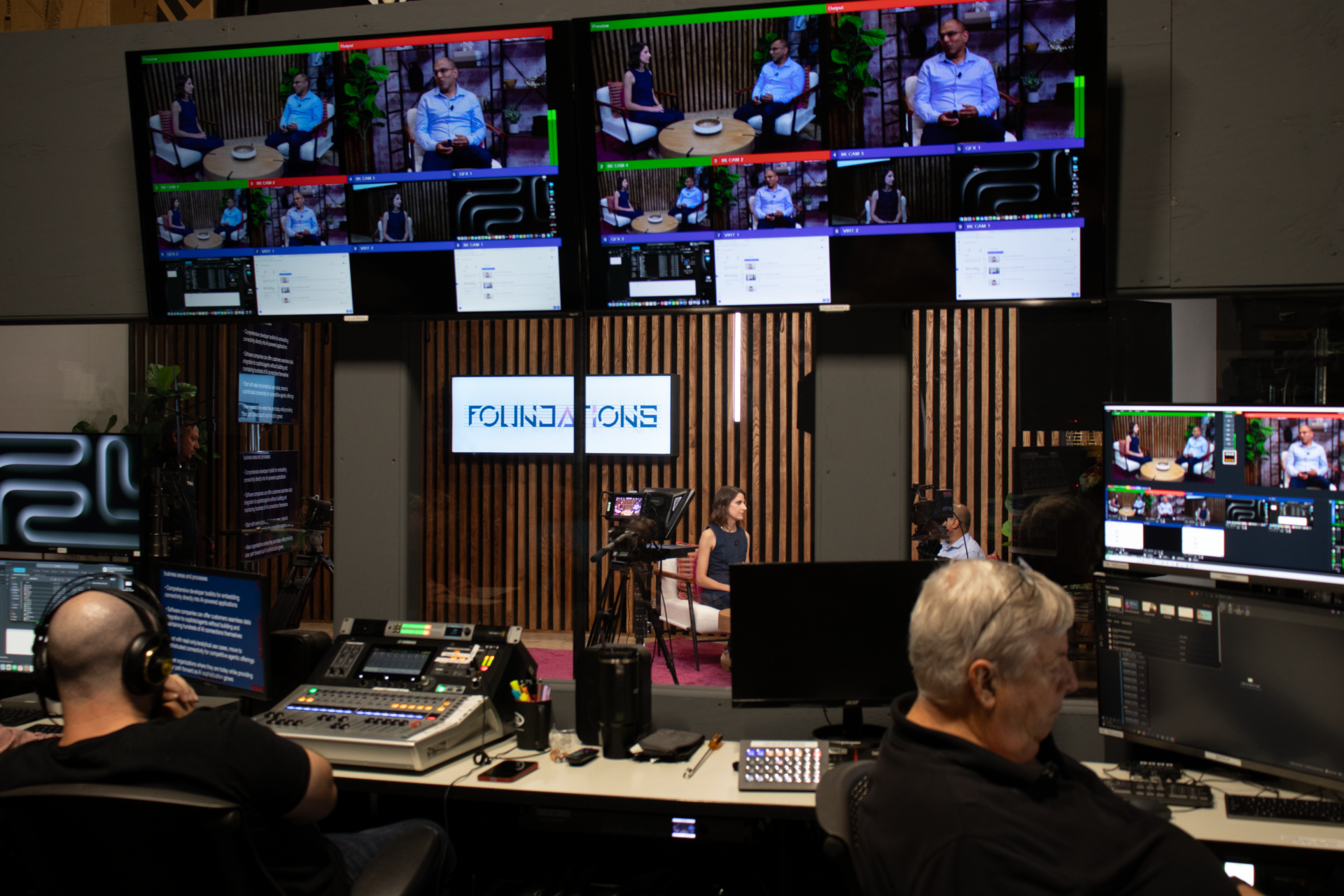
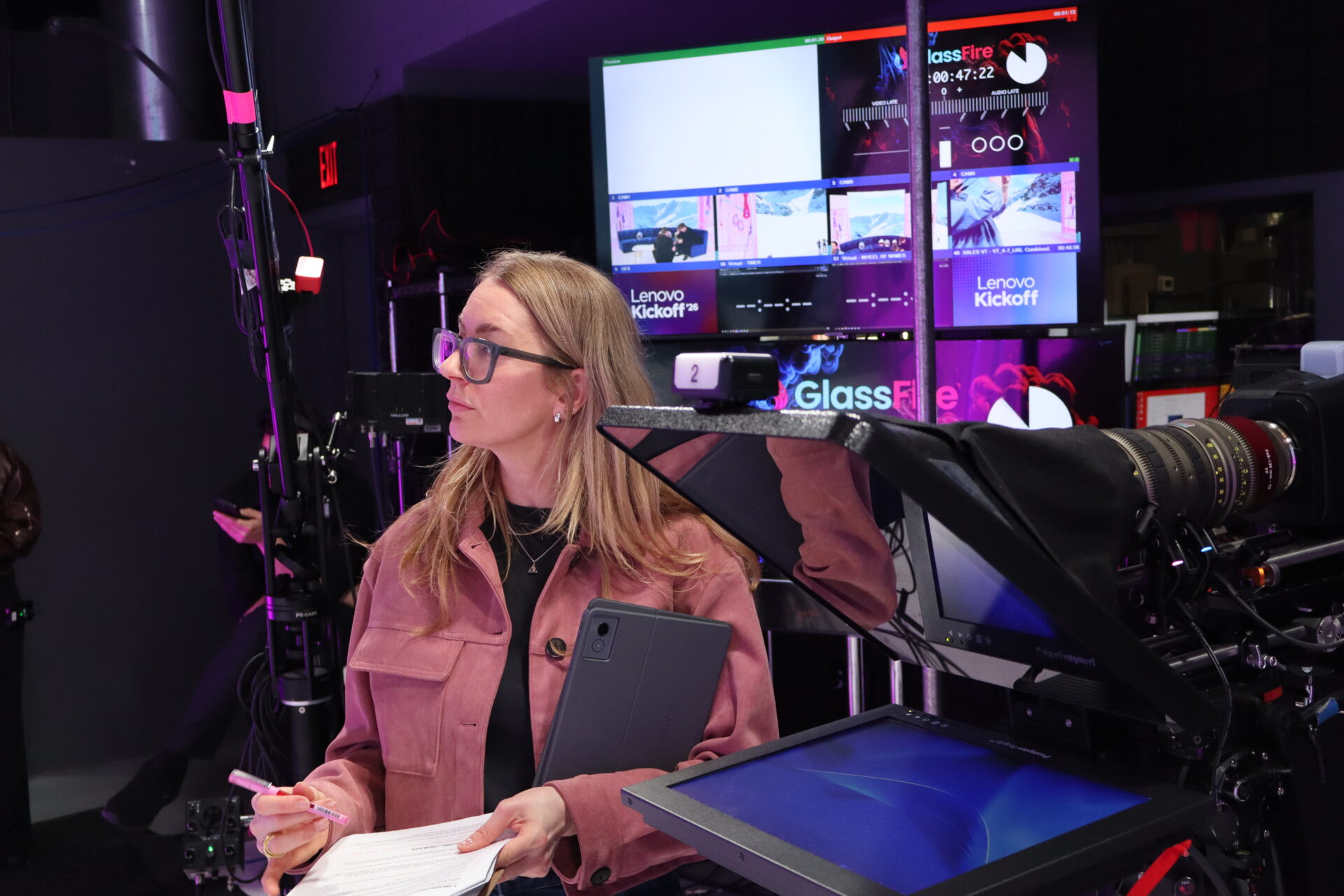
Think of hybrid as a TV show production, not a livestream. A hybrid event done as an afterthought typically would have one camera pointed at the stage for the virtual audience to watch, whereas one done well would have multiple camera angles just as if you were watching TV, along with animated lower thirds with speaker names and titles, animated transitions and branded graphics. It would also include a “host” for virtual attendees, managing their experience from start to finish, providing additional content such as live interviews, and encouraging them to engage through real-time polls and virtual breakouts. Great hybrid events require experience across both physical and digital dimensions of delivery, which is exactly what TSEC brings.
We have global teams across multiple time zones. Is virtual the right format for us?
For distributed global organizations, virtual and hybrid aren’t just a cost decision — they’re often the most strategically sound choice. According to vFAIRS, 69% of event organizers now use virtual or hybrid formats specifically to reach global audiences. A well-designed virtual event removes time zone barriers through replays and on-demand content, giving every regional team an equal seat at the table.
How quickly can TSEC pivot an existing live event to hybrid or fully virtual?
This is exactly where our 40 years as an event production agency pays off. When a client needs to shift formats, we’re not starting from scratch; we’re applying a proven playbook. We’ve executed pivots with very short lead times without sacrificing production quality or audience experience. The earlier you bring us in, the more options you have…but we’re built to move fast when we need to.
Why partner with TSEC rather than manage virtual event production in-house?
Virtual and hybrid events look deceptively simple from the outside. But the difference between an event that lands and one that falls flat almost always comes down to details that only experience teaches: content flow, transitions, audience engagement design, technical redundancy, presenter preparation, and real-time problem solving. As a creative event agency with nearly four decades behind us, we don’t just run your event; we help you design an experience that achieves your business objectives and gives you the data to prove it.
You Shouldn’t Have to Justify Great Communications Alone Y
If you’re reading this, you probably already know that going dark isn’t the answer. The challenge isn’t conviction, it’s making the case to the people holding the purse strings and then executing in a way that actually delivers.
That’s exactly what we’re here for.
We’re no strangers to working through options with our clients. As a full-service experiential event company with 40 years of navigating every version of this conversation, TSEC can help you build the internal case to take to your leadership team, design the right format for your budget, produce an experience your audience won’t forget, and measure the event ROI that proves it was worth every dollar.
This summer, we’re offering complimentary 30-minute strategy sessions with our team for organizations looking to rethink their event portfolio and approach.
No pitch. No pressure.
Just a conversation with people who’ve done this before and genuinely want to help you figure out the smartest path forward… really. You shouldn’t have to justify great events and communications alone.
Let’s build the case together. Book your free strategy session today!
Stay in the loop!
Join our email list for the latest updates, insider tips and expert blogs straight from our team.